Opera seats in Italy: can you see both the stage and the translated libretto?

An opera seat in Italy has at least two sightlines. There is the line from your eyes to the stage, and there is the line from your eyes to the translated text. They need not point in the same direction. Milan's Teatro alla Scala and Venice's Teatro La Fenice show why choosing by price or box number alone can leave out something important. Before buying, decide whether you want an uninterrupted view of the action, easy access to the words, or simply the pleasure of listening in a particular auditorium.
Where are the words?
At La Scala, the box-office guidance describes electronic librettos in front of seats. They offer Italian and English for the season's performances, with original-language options for certain other languages. The theatre also notes that some seats lack the display for technical or practical reasons. A label showing that the opera is sung in Italian does not tell you whether the seat in your basket has a screen. If following dialogue is essential, establish that detail before confirmation.
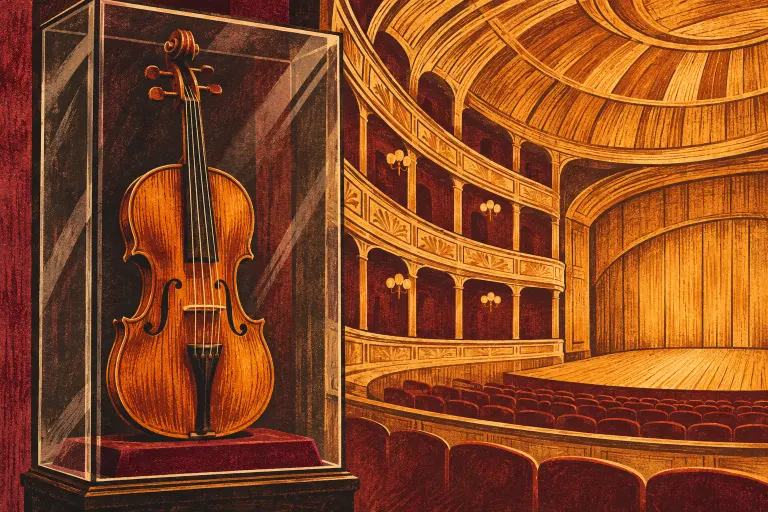
La Fenice describes a different arrangement in its ticket and audience guide. Translated words appear above the stage. A central view makes it easier to move your eyes between singers and text. From a sharply angled seat, an overhang or box edge that leaves most of the stage in sight could still affect the upper part of the picture. The seat plan and any view warning are therefore part of deciding whether the translation will be useful to you. An answer supplied by the Milan theatre cannot settle a question about a seat in Venice.
Think about the second row of a box
A box is a little room opening into the auditorium. Front positions and positions behind them share an address, but not necessarily the same geometry. Near an auditorium wall, a spectator may look diagonally towards the far half of the stage. Someone behind that person must also see past another head. If the booking page offers a preview from the chosen seat, look first for the near edge of the stage and then for the top edge where titles might be. A photograph taken standing at the box rail tells you little about the seated view from its back.
Imagine the same seat for two different listeners. One knows the work and is coming chiefly to hear the orchestra. Another is seeing the opera for the first time and wants to catch every exchange between two characters. Their sensible spending choices may differ. Compare adjacent price categories rather than assuming one entire section of the house offers identical views. If your group needs seats together, inspect each selection before you pay. Two consecutive numbers in a box can represent very different experiences of the same scene.
Give the story a head start
Read a short synopsis beforehand, preferably divided by act. Choose one relationship or misunderstanding to follow during the first scene. The translation will then fill in the detail instead of carrying the whole evening on its shoulders. It is quite possible to lose sight of a singer's gesture while waiting for the last few words of a translated phrase. Glance back to the stage when the orchestra or another character reacts. You have come for the interplay between people, sound and space, not a reading examination.
For a multi-city trip, use our guide to planning a concert evening to place the performance on a day when your arrival is comfortably early. Check the specific venue named on the ticket, door instructions, approximate duration and interval information. Use the evening planning guide to think about the journey home after the curtain falls. A daytime tour of an auditorium, however enjoyable, does not reserve a performance seat. Our guide to visiting historic theatres treats that as a different way to see the building.
When browsing arts and events experiences, check the title of the work, the performance date and whether an actual seat is included. Buy on the assumption that the published restrictions apply. It is easier to enjoy an inexpensive place with a clearly understood side view than to spend the overture trying to discover where the words have gone.
Milan’s guide to choosing a La Scala museum visit or performance explains which parts of the building each ticket is meant to show you.
Sources & further reading
Turn a good read into a great day.
Find a highly rated Italian experience that brings these stories to life.
Explore related experiences →