Materials as clues: reading brick, stone and plaster in Italian streets

Italian streets reward a second look at things that initially seem like background: the edge of a doorway, a brick arch, a patch of plaster beneath a window. Materials can turn a walk into a conversation about making, movement and repair. You do not need to identify every rock. Begin by separating what you can actually see from what you would need a reliable source to explain.
Start with a joint, a surface and a question
Choose one ordinary stretch of wall from a place where you can stand without blocking anyone. Notice the size of its visible units, the lines between them and the way light falls across the surface. Then ask a modest question: does this finish continue around the corner, or change at a doorway? Is a pattern made by the material itself, by its arrangement, or by a painted surface?
Those observations are useful even when the answer remains uncertain. A pale surface is not automatically marble; a red wall is not automatically exposed brick. Avoid treating colour alone as a geological identification or a date. Our guide to reading layers of history in Italian cities offers a wider framework for keeping observation and historical explanation in conversation.
Florence: distinguish a building's covering from its structure
The Opera del Duomo's account of its building materials describes the white, red and green cladding of Florence's cathedral complex alongside sandstone, bricks, roof tiles and mortar. It also distinguishes the cathedral's nineteenth-century façade from earlier work. The visible surface therefore cannot be read as a single material laid down at a single moment.
Use that example to ask better questions elsewhere. Which parts are carrying a structure, which form a covering, and which are decorative details? You may not be able to settle this from the street, and that is fine. A museum explanation, conservation notice or architectural guide can supply evidence that an attractive photograph cannot. The Florence city guide can help you make time for both an outdoor look and a more focused visit, without assuming that every part of a monumental complex shares one admission arrangement.
Bologna: a familiar colour can hide a varied palette
Bologna Welcome's geological itinerary connects the city's brick and terracotta to clay, but it also points out sandstone figures at Palazzo Davia Bargellini and Istrian limestone at the portico of Santa Maria dei Servi. Even a city strongly associated with red building materials contains a much more varied vocabulary. Looking for the exceptions is often more rewarding than collecting another photograph that confirms the familiar description.
On a walk, compare a broad wall with a carved figure or a column. Do they ask the material to do the same job? How does the scale of the detail change your response? These are starting points for looking, not instructions to test a surface by scratching, tapping or touching it. Use Bologna Tour Hub for the city chapter, checking current access separately if a courtyard or interior is part of the plan.
Let plaster complicate the story
A plastered surface can make the underlying construction difficult to read. That does not make the building less interesting. Look at the relationship between the broad finish and the edges of windows, doors and cornices. A change in colour or texture may prompt a question about maintenance or alteration, but it does not prove when a repair happened or what was there before.
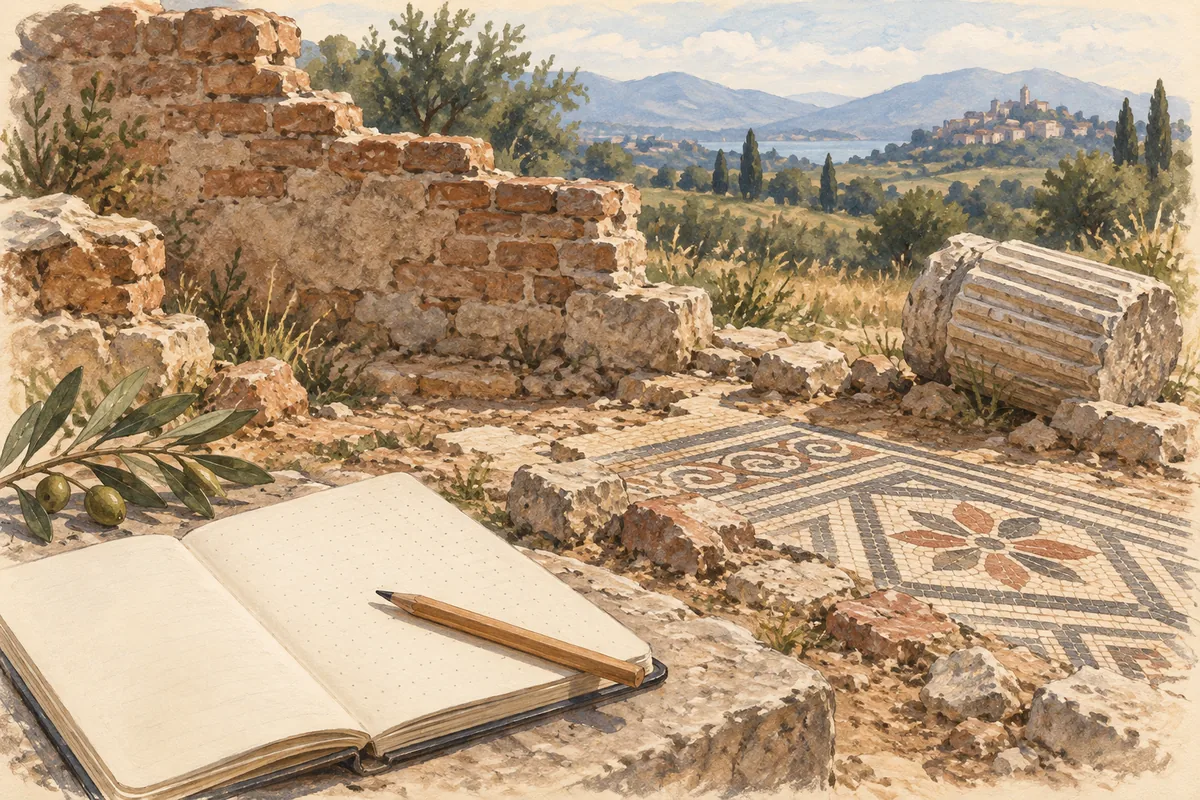
Resist the tempting story that exposed material is always more authentic than a covered surface. Without evidence about the particular building, that is an aesthetic preference dressed as history. A painted finish, a replacement block and a repaired joint each need their own context. Our discussion of reading an archaeological site from fragments makes a related point: gaps in what survives should remain gaps until evidence supports an explanation.
Think beyond the city boundary
A material's presence can suggest a journey, but appearance alone cannot tell you its route. The Florence account describes a network of quarries and workshops supplying the cathedral complex; Bologna's itinerary notes the historical role of waterways in bringing Istrian limestone to the city. These documented examples widen the picture from a finished monument to the people, transport and places involved in making it.
Do not turn that insight into a guess that every similar-looking stone came from the same quarry. Instead, look for named suppliers, places or building campaigns in trustworthy interpretation. If this becomes a recurring interest, our guide to choosing an Italian walking tour can help you find a visit whose actual subject matches your curiosity. Browse the Italy experience collection for relevant options, checking what each guide or venue includes.
Take home a question, not a sample
A notebook or photograph is enough. Keep public routes clear, respect barriers and leave surfaces and loose fragments untouched. Make three short notes: what you saw, what a source explained and what remains uncertain. That small distinction prevents an enjoyable walk from becoming a collection of confident guesses. The reward is a more attentive eye: a wall that once seemed merely picturesque can become the beginning of a much larger story.
Sources & further reading
Turn a good read into a great day.
Find a highly rated Italian experience that brings these stories to life.
Explore related experiences →