Rome or Florence: which city fits your Italy trip?
Rome and Florence make a rewarding pair, but a short trip may require a choice. The most useful comparison concerns the kind of attention each place invites. Do you want to explore ancient structures and the many lives of a large historic city, or build a concentrated stay around art, architecture and a more compact central route? Neither answer is more sophisticated. It is simply a better starting point than asking which city is objectively superior.
Choose Rome when historical layering excites you
Rome suits travellers who enjoy tracing relationships between periods and places. Its UNESCO description brings ancient remains, religious buildings and later urban developments into one historical setting. A visit can move between those themes, but each deserves enough time to become more than a name on a checklist.
Imagine a day organised around one substantial archaeological experience, followed by lunch and a walk that leaves room for unexpected details. If that sounds appealing, Rome may be the stronger choice. The regional first-day guide offers a local framework. You can use it without assuming that every famous Roman attraction belongs in the same day.
Choose Florence when art is the main thread
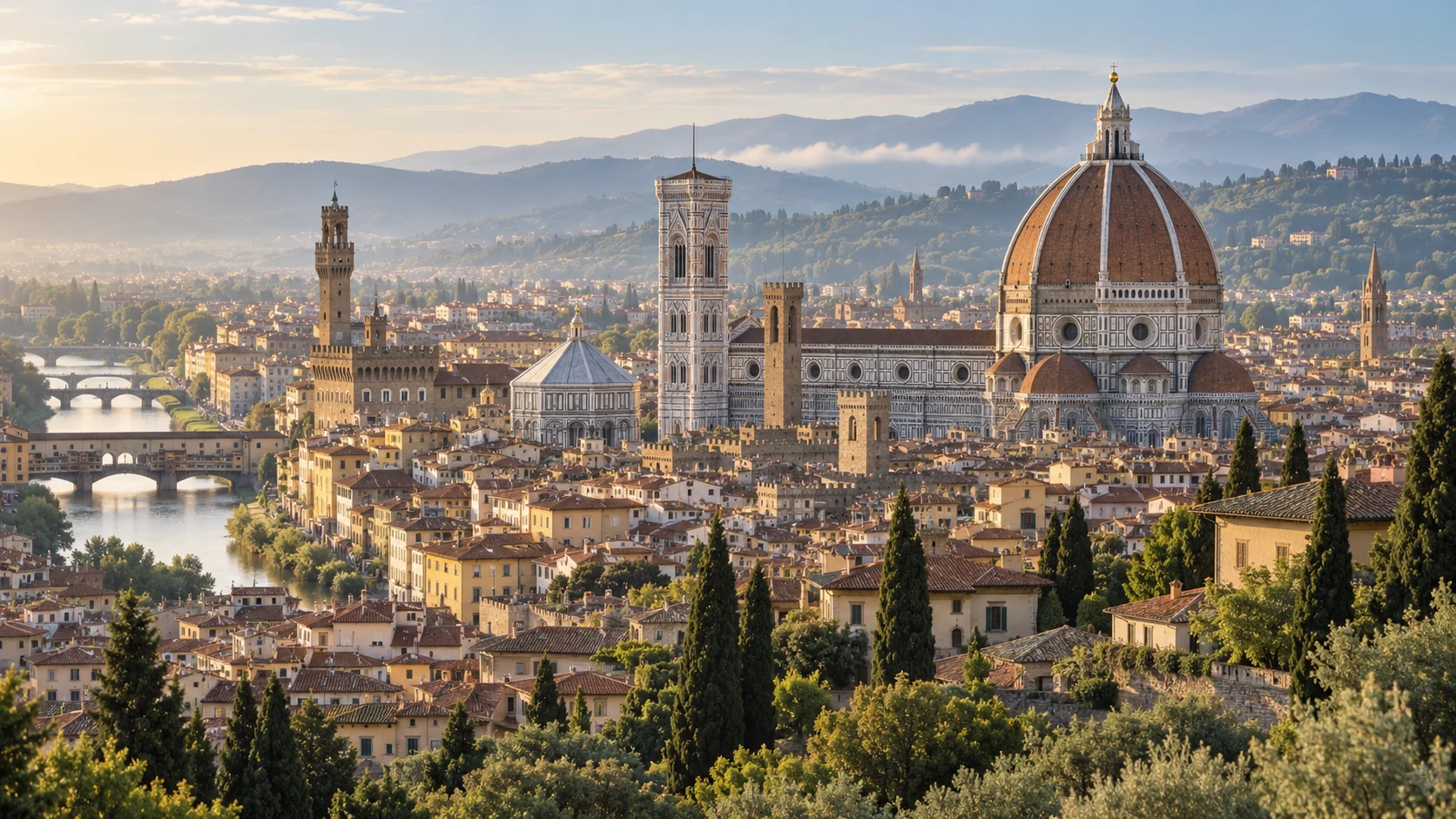
Florence can provide a focused encounter with painting, sculpture and architecture. UNESCO’s historic-centre listing connects the city with the development of Renaissance art. For a visitor, the practical opportunity is to relate what you see inside a gallery to streets, churches and civic spaces outside it.
Imagine spending time with a few works, discussing them over lunch and then walking through a different part of the centre. If that is your ideal day, Florence deserves a strong claim on the itinerary. Our Florence destination guide introduces relevant experiences. Read our art-viewing guide if you want depth without exhausting yourself in consecutive museums.
Compare the effort of your actual plan
Do not rely on a vague impression that one city is easy and the other difficult. Plot the accommodation and the specific places you want to visit. Check walking distances, transport options, stairs and the amount of standing involved. A tightly packed Florence day can be more tiring than a gently planned Rome day, despite the different scale of the cities.
Choose the pace for the group rather than the most energetic traveller. If someone needs regular seats, a shorter route or step-free access, investigate those details before booking. Our practical preparation guide explains why access planning should begin with specific journeys and activities rather than broad labels attached to a destination.
Let food support the comparison without deciding everything
Both cities can provide enjoyable food experiences, so avoid reducing the choice to a contest between cuisines. Instead, ask how food fits your day. Would you prefer a guided neighbourhood tasting, a cooking class or a leisurely independent meal? The answer can help you choose the right activity within either city.
Compare Rome food experiences with Florence food activities. Read the menus, dietary arrangements and location rather than assuming all classes or tasting walks are equivalent. A specific experience that strongly appeals may be more decisive than an abstract argument about the city as a whole.
Combine them only when the calendar supports it
A rail connection can make the pairing practical, but moving hotels still consumes time. If the entire trip is short, choosing one city can provide a better experience than dividing every day into fragments. Our one-week planning guide offers a two-base model, while the trip-length guide helps count usable days honestly.
If you include both, give them different emphases. For example, make ancient history a principal Rome theme and art a principal Florence theme, while leaving room for each city’s other qualities. This is a way to create variety, not a claim that Rome lacks art or Florence lacks deeper historical layers.
Make the choice with one imagined ordinary day
Picture the morning after your main attraction. What would you want to do next? If you still have several appealing ideas in one city, that is strong evidence for staying longer. A destination should earn its place through the days you want to spend there, not only through the photograph you hope to take.
Use our Italy planning framework to connect the decision with transport and bookings. Whichever city you choose, leave room for a modest discovery that was not on the original list. A well-chosen trip deepens your interests rather than settling a permanent rivalry between two remarkable places.
Sources & further reading
Turn a good read into a great day.
Find a highly rated Italian experience that brings these stories to life.
Explore related experiences →