What can a cooking class in Italy teach you beyond the recipe?

A useful cooking class in Italy leaves you with more than lunch and a recipe sheet. It can help you notice how a cook judges texture, organizes a sequence of small jobs, chooses ingredients and explains a local habit. The most valuable souvenir may be knowing what to look for when a dough feels wrong. Choose a class around something you want to understand, then check how much of the work you will actually do.
Begin with a skill, rather than a long menu
Before comparing classes, finish this sentence: “At home, I would like to be able to…” Perhaps you want to roll pasta evenly, shape a filled parcel or understand how a pizza dough behaves. A focused lesson can give that question more room than a menu containing several unrelated dishes. This is an editorial way to compare options, not a promise that short menus always make better classes.
Ask which stages are practical, which are demonstrated and which must be prepared before you arrive. Resting dough and slowly cooked sauces do not fit neatly into a visitor’s timetable. Prepared components are not automatically a weakness; what matters is whether the teacher explains the missing stages and gives you a realistic method for repeating them. Compare the learning goal with your broader regional food itinerary so each activity contributes something different.
Watch the decisions between the instructions
A recipe can tell you an amount. A teacher can show you what that amount is meant to achieve. During a practical lesson, useful questions include how the surface should feel, when to stop working it and what changes when an ingredient behaves differently. Ask before photographing or recording demonstrations, and make a few notes in your own words. You will remember a reason more reliably than a beautiful but unexplained photograph.
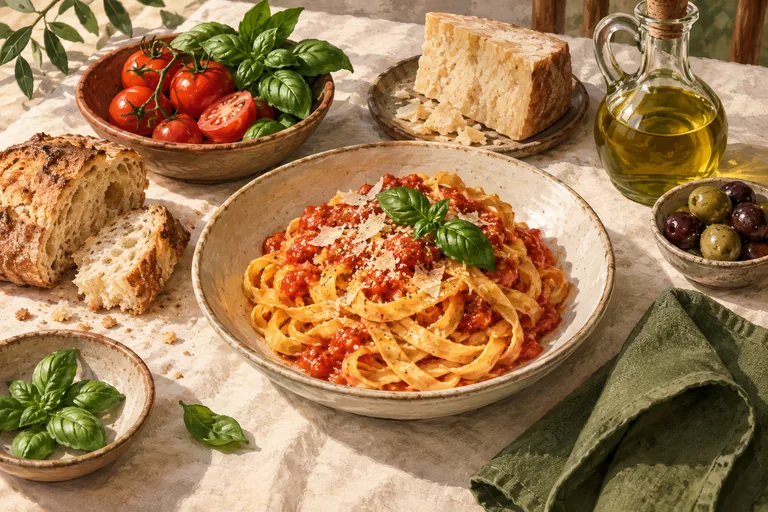
Bologna Welcome’s account of fresh pasta in Bologna offers a concrete example: it identifies flour, eggs and hand rolling with a mattarello, or rolling pin, as part of the local pasta tradition. That gives a prospective learner a useful technique to ask about. It does not establish that every Bologna class teaches hand rolling, or that a particular session is available on your date. Check the current listing and booking conditions rather than transferring a regional practice into a provider’s promise.
Let the region remain part of the lesson
Italian cooking is not a single menu waiting to be reproduced in every city. In its 2025 inscription of Italian cooking, UNESCO emphasizes shared practice, respect for ingredients, knowledge passed between generations and approaches that limit waste. That recognition concerns a living cultural practice; it is not a quality certificate for an individual tourist class.
A practical question follows: why is this dish being taught here? A teacher may explain family experience, local ingredients, restaurant practice or a menu designed for visiting beginners. Listen for those differences without demanding that one person represent an entire region. Use our Bologna destination guide to place a pasta lesson within a city stay, and the Bologna dining collection to compare relevant local experiences.
Naples offers another distinct starting point. UNESCO’s record of the art of the Neapolitan pizzaiuolo, inscribed in 2017, describes dough preparation, oven work and the transmission of skills through workshops and apprenticeship. A visitor’s class can introduce a small part of that knowledge. It should not be mistaken for professional training or a guarantee that an ordinary home oven reproduces a specialist oven’s results. Explore the wider setting through Naples food experiences.
Check the room as carefully as the recipe
Hands-on can mean individual workstations, shared dough or a rotating turn at the table. Ask how the group is organized and whether everyone performs the skill you want to learn. Confirm the teaching language, time spent standing, seating arrangements, access to the room and any age requirements. Someone who loves tasting may prefer a demonstration, while an enthusiastic home cook may want repeated practice. Neither preference needs an apology.
Dietary requirements deserve a specific conversation before booking. Explain the requirement and ask what can actually be changed, including shared preparation areas. Do not infer suitability from a dish name or a vegetarian photograph. Our guide to comparing food activities for different diets provides a useful checklist, while the provider must confirm the arrangements for its own class.
Leave enough time to enjoy what you made
Read whether the price covers ingredients, drinks, a meal, a tasting or optional extras. A class with food at the end can occupy the part of the day you would otherwise reserve for lunch, but do not assume that every tasting is a full meal. Allow time to reach the venue and avoid placing a tightly timed train immediately after the advertised finish. A relaxed table conversation is easier to enjoy when nobody is watching the station clock.
Browse the national Italy dining experiences collection with one learning goal in mind. Before leaving the lesson, ask what equipment is essential, what can be adapted at home and which step beginners most often rush. Then plan a modest first attempt after the trip. Repeating one technique thoughtfully will teach you more than filing away six recipes you never touch.
Sources & further reading
Turn a good read into a great day.
Find a highly rated Italian experience that brings these stories to life.
Explore related experiences →