How can mosaics change the way you read an Italian historic building?

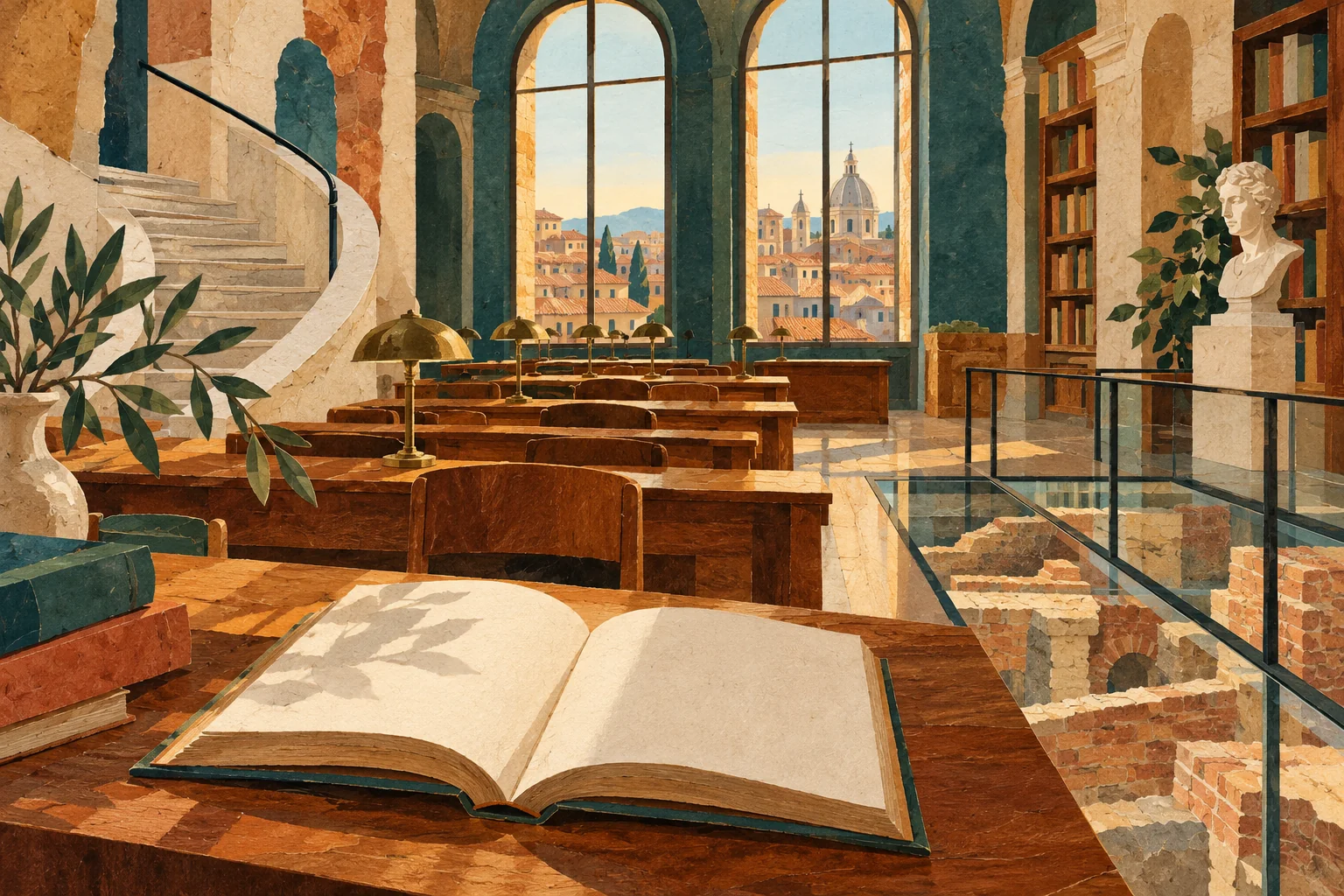
A mosaic photograph often turns a building into a flat image: a glittering face, a patterned border or a field of color. In person, the same work belongs to a wall, floor or curved surface, encountered from a particular distance and under changing light. Looking at mosaics in Italy becomes more rewarding when you ask how they shape the place around them. Ravenna and Venice provide different settings for that question, without representing every period or tradition in the country.
Look at the room before the detail
On entering a historic building, resist the urge to point your camera immediately at its most recognizable image. Notice where the decorated surface sits. Is it above ordinary eye level, along a route of movement or beside a significant architectural opening? What can you see from the entrance, and what only becomes visible when you move farther inside? The first view is part of the work’s effect, even if it reveals less detail than a photograph taken with a long lens.
The official Ravenna tourism account places San Vitale and its celebrated mosaics within a sixth-century church. Use that historical setting as an anchor, then notice how decoration and architecture work together. A figure high above you has a different relationship to the viewer from a pattern beneath your feet. Do not treat every mosaic as a portable picture that happens to be attached to a surface.
Let light become part of the observation
From a permitted position, look at the same area from slightly different angles. Some pieces may seem to brighten while others recede. Record what you notice without claiming to know the exact material or original lighting arrangement. Stone, glass and metallic effects demand careful identification; a gold appearance alone is not a sufficient technical description. Read the institution’s interpretation before assigning a recipe to the surface.
The experience can be especially striking when a decorated surface curves. A reproduction may help you understand the overall composition, while the building reveals changes of light and distance that the reproduction cannot preserve. Neither view is complete on its own. Our guide to enjoying art without museum fatigue offers a useful principle here: one sustained observation can be more memorable than rushing to photograph every panel.
Keep different centuries distinct
Venice’s Basilica di San Marco has a long decorative history. Its official chronology places an early phase of mosaic decoration in the late eleventh century and describes subsequent developments. That sequence should discourage the convenient claim that everything visible belongs to one moment. Ask which part of the building or decorative program a label is discussing, and whether a surface has been repaired, replaced or otherwise altered over time.
The basilica’s museum presents detached mosaic fragments, including material associated with nineteenth-century restoration, which can help visitors consider technique and preservation more closely. A fragment viewed at manageable height answers different questions from a large composition in its architectural setting. It may reveal the arrangement of pieces while telling you less about the original encounter from the floor below. Both views have value when their limits are clear.
Read an image without inventing its meaning
Choose one gesture, border or relationship between figures and architectural features. Describe it plainly before interpreting it. A repeated motif may organize the eye; an inscription may identify a person or subject; a location near a sacred focus may be significant. Let official interpretation support those readings. A modern association that occurs to you can be interesting, but it should not be presented as the maker’s documented intention.
This distinction also matters with fragments. Missing sections, restorations and changing settings affect what you can conclude. Our article on reading archaeological fragments offers a related approach to incomplete evidence. For a different setting and period, Roman mosaics in Naples focuses on close looking at Roman material. Comparing these experiences should sharpen awareness of differences, not collapse Roman, early Christian and later Venetian work into one continuous style.
Check the building and the ticket
A church, its museum, a treasury, a terrace and a special viewing area may have separate access arrangements. Read the current official ticket descriptions for the spaces you actually want to enter, especially at San Marco. A basilica admission should not be assumed to include every adjoining area. At Ravenna, check which monuments a ticket covers and whether particular entry slots or practical restrictions apply on your date.
Our guide to respectful church visits helps keep an art visit compatible with worship. Follow photography instructions, avoid flash where prohibited and do not cross barriers to improve a detail shot. If steps, standing time or neck movement are difficult, ask about seating, accessible routes and alternative interpretation before arriving. A visually rich visit should still fit your physical needs.
Browse Italy’s arts and cultural experiences for guiding that names the actual buildings and included areas. Italy’s ceramic traditions offers another way to explore how material, making and regional context interact. Leave each mosaic visit with a detail and a location together: not simply blue and gold, but blue and gold encountered above a particular space. That connection is what a building adds to the image.
Sources & further reading
Turn a good read into a great day.
Find a highly rated Italian experience that brings these stories to life.
Explore related experiences →