How do you visit Italy’s monumental cemeteries as places of art and remembrance?

A monumental cemetery can hold sculpture, architecture and a city’s public memory in one place. It is also a place where people come to mourn. A good visit keeps those purposes together. In Italy, Milan’s Cimitero Monumentale and Bologna’s Certosa offer different settings for this kind of attention, without requiring you to turn a trip into a survey of famous graves. Choose a modest route and let remembrance set the pace of your looking.
Decide why this visit belongs in your trip
Begin with an interest you can describe simply: sculptural gesture, the design of a family memorial, the way covered passages organize movement or how a city commemorates shared loss. A clear question helps you avoid wandering as though the cemetery were merely an unusual park. It also makes it easier to choose a guide whose route matches your interests and to recognize when you have seen enough.
The approach resembles our guide to respectful church visits, though each cemetery has its own rules and practices. Quiet behavior, appropriate clothing and space for people who are visiting relatives are basic courtesies. If a ceremony is taking place, alter your route. The most interesting artwork in the complex can wait; another person’s private moment should not become part of your travel experience.
Use Milan and Bologna as distinct examples
Milan’s municipal visitor information presents the Monumentale through art and civic memory. Its official guided-visit arrangements require a booking process and confirmation; independent admission and a reserved tour should not be confused. Our local guide to Milan’s Cimitero Monumentale can help you decide what to notice before checking the municipality’s current practical information. Choose a few works or one section rather than trying to complete a list of celebrated names.
At Bologna’s Certosa, the official tourism account describes the adaptation of a former Carthusian monastery into a cemetery in 1801, followed by further architectural and artistic development. Cloisters, galleries and successive memorials create a different spatial experience. Our guide to Bologna’s Certosa gives that visit its own local context. The two places can illuminate each other, but they are not interchangeable examples of a single national cemetery style.
Read a memorial in three layers
Start with form. Notice the scale, material and posture of any represented figure. Then look at placement: is the memorial enclosed, facing a path or part of a larger architectural sequence? Finally, read the available identification or official interpretation. Those three layers help distinguish what you see from what a source explains. A flower, tool or gesture may have an established meaning, but it should not be assigned one by instinct alone.
Remember that a monument is a commissioned act of remembrance. Its size and imagery tell you something about how a person or group wished to be represented; they do not give a complete account of that life. Public memorials also reflect the circumstances in which they were made. Reading the date and context can be more illuminating than treating every inscription as a timeless statement made by the city as a whole.
Plan movement as carefully as interpretation
Large cemetery complexes can involve gravel, uneven surfaces, changes in level and long distances between a chosen work and an exit. Check the official map, usable entrances, toilets and accessibility information before committing to a route. Ask about specific conditions if walking distance or wheelchair access is important. A general description of an accessible site may not answer the question about the particular gallery you want to visit.
Our advice on walks for mixed energy levels applies here with an additional consideration: a bench or convenient-looking ledge may belong to a memorial and should not be treated as ordinary seating. Use designated places to rest. Carry the current map offline, and leave enough time to return before closing rather than assuming the nearest gate will be open. Seasonal hours and temporary restrictions deserve a fresh check.
Keep photographs secondary
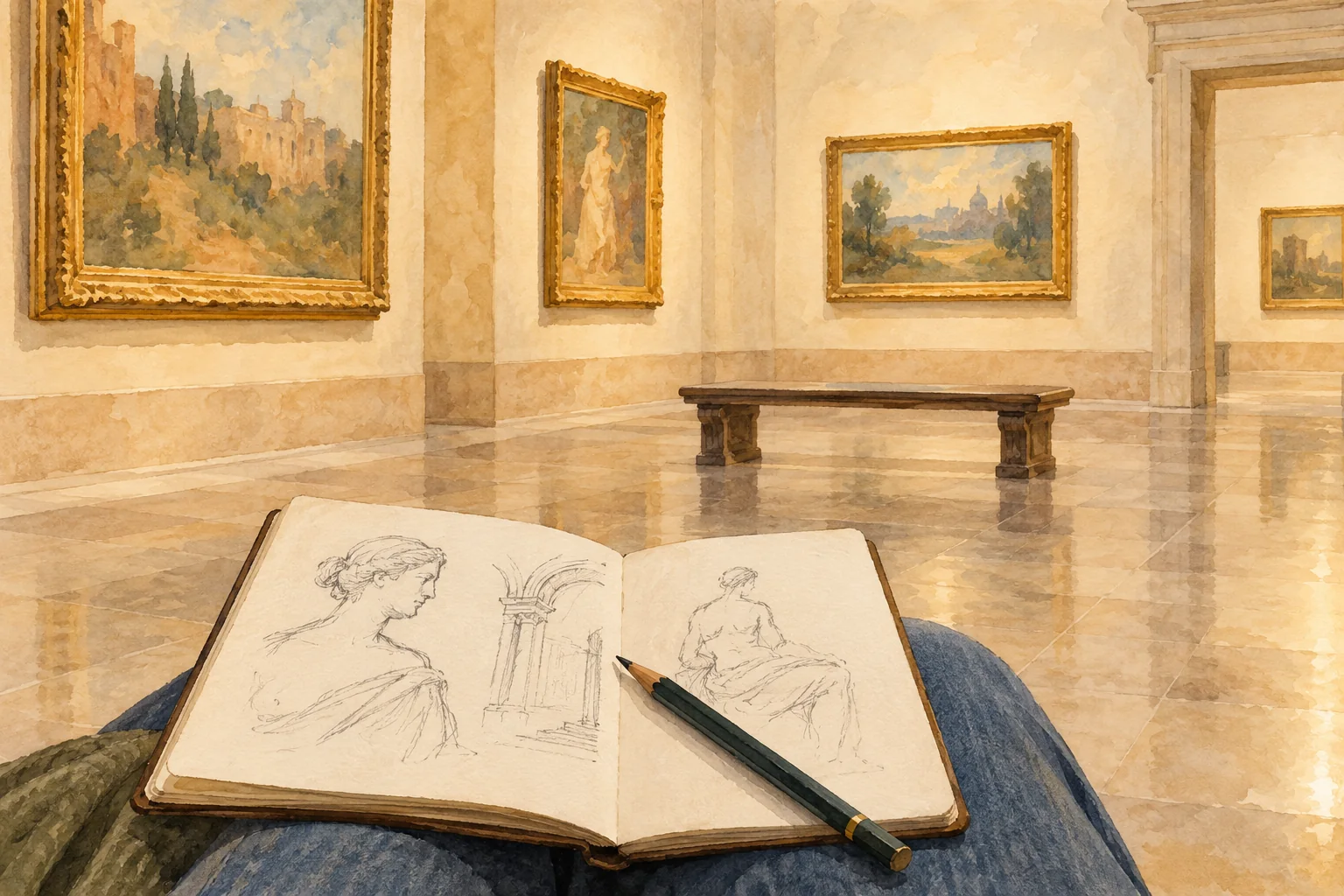
Follow the cemetery’s current photography rules, including any requirements for professional equipment or organized groups. Even where personal photography is permitted, avoid capturing mourners, ceremonies or private inscriptions merely because they are visible. Do not climb onto memorials, move objects left by families or lean on sculpture for a better angle. A sketch made from an appropriate public spot, or a few written observations, may be a more considerate way to remember a detail.
For families, introduce the purpose of the place before arriving. Children can look for differences in materials or architectural shapes without turning graves into a treasure hunt. Keep questions thoughtful and answer only what you know. An unfamiliar custom is an opportunity for care, not a spectacle.
Our Italy history experiences can help you find informed guiding, with the actual cemetery and route confirmed in the listing. reading Italy’s historical layers offers a broader way to connect what you have seen with the surrounding city. Leave time afterward for a quiet walk or pause. A cemetery visit can be intellectually rewarding, but it need not be consumed at the pace of another attraction.
Sources & further reading
Turn a good read into a great day.
Find a highly rated Italian experience that brings these stories to life.
Explore related experiences →