What can Italy’s libraries show you beyond books?

A library can change the pace of an Italian city break. After streets full of shop windows and monuments, you enter a place built around attention: to a page, a collection, a reader or the past beneath the floor. You do not need to be a manuscript specialist to find that interesting. You do need to know what kind of visit the institution offers, because a working reading room and a visitor attraction may share a building without sharing admission rules.
Decide whether you want architecture, an exhibition or research access
Before adding a library to your itinerary, write down the part that attracts you. Is it a staircase, a historic room, an exhibition about an author, or the chance to consult a particular book? Those are four different requests. A general opening time may refer to library services rather than the room you saw in a photograph. Look for a dedicated visitor page and a current notice before arranging the rest of your morning around it.
This is an especially useful habit when following our guide to enjoying Italian art without museum fatigue. A short, focused library visit can add variety, but it should not become another ambitious collection to complete. Choose one question about the building or its users and give yourself time to look for an answer.
Florence: read the room as well as the books
The Biblioteca Medicea Laurenziana’s monumental-area guide describes Michelangelo’s design and the contrast between its vertical vestibule and long reading room. Its wooden benches, or plutei, served as both reading desks and storage. These are useful clues to the physical arrangements of scholarship: where a reader sat, how light arrived and how a collection was organized.
During a permitted visit, try looking along the room before concentrating on details. How does repeated furniture direct your eye? Where would you place a book to read comfortably? These are observations to explore, not proof of every historical reader’s experience. The library’s research-access rules are separate: consultation of rare originals requires a justified research purpose. A sightseeing ticket does not grant manuscript handling or unrestricted access to study areas.
Keep Florence within the itinerary you already have. Our Florence destination guide introduces the city, while Florence Tour Hub’s day-planning page helps place a specific visit alongside nearby activities. Check the library’s current monumental-area notices rather than borrowing the research-room timetable.
Milan: a library can be a cultural programme
The Biblioteca Nazionale Braidense’s visitor information places it inside Palazzo Brera, alongside the Pinacoteca and Accademia, and distinguishes library services from exhibition access. Its guided visits and workshops page lists both scheduled and request-based activities. That programme offers a way into the institution without pretending to be a researcher.
Choose an activity for the question it answers rather than for the number of rooms it might include. A visit about books as objects might make you notice bindings; one connected to an author might focus on how a collection was assembled. Read the event’s own language, age and booking information. Being in the same palace does not make a gallery ticket interchangeable with a library activity, and an open building is not a promise that every room is available.
Bologna: the city can appear beneath the library
At Salaborsa, the subject changes again. The library’s official archaeological-visit information explains the remains beneath the glass floor of its covered square, spanning different periods of Bologna’s history. Access to the excavations follows its own published hours, and group visits must be arranged. Check the linked current calendar rather than assuming that a view through the floor and a visit below it are identical experiences.
The useful question here is how a public building can accommodate present-day learning and older physical evidence. Notice what interpretation helps you understand a fragment and what remains uncertain. Our guide to reading archaeological fragments offers a method for separating visible evidence from imaginative completion. For broader city context, continue with Bologna’s history experiences.
Make room for the people using the place
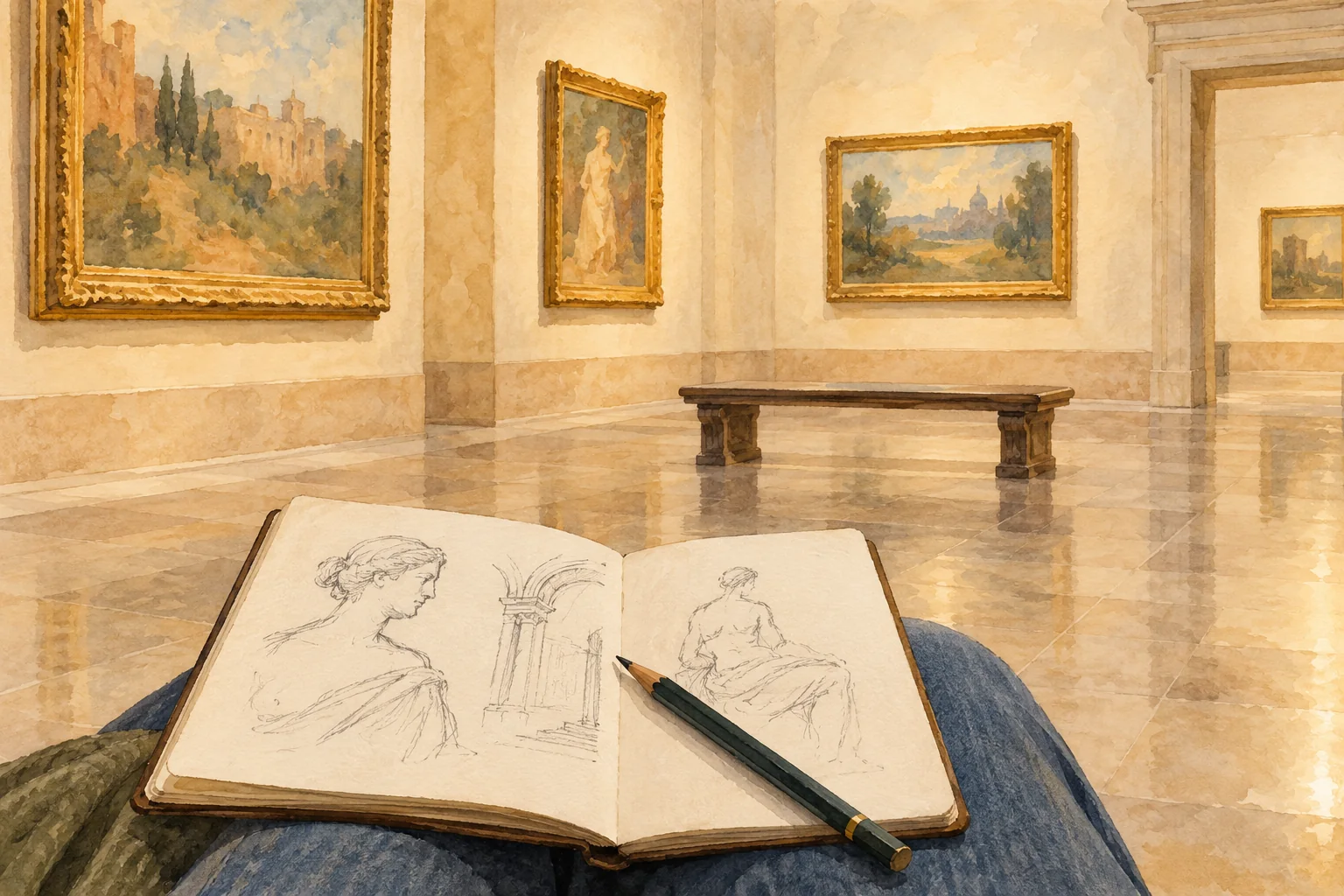
Keep conversations low, follow photography notices and ask before taking a seat in a working area. Treat readers as people concentrating, not as scenery. A useful family activity is to choose one architectural detail to sketch afterwards, avoiding any pressure to touch objects or interrupt staff. If steps, seating or sensory conditions matter to your group, ask about the exact visitor route rather than the building in general.
Compare relevant Italy art and cultural experiences by their actual inclusions; a neighborhood tour does not automatically include a library interior. Leave with one detail you can describe accurately and one question to explore later. That is a satisfying cultural visit even when the books themselves remain closed.
Sources & further reading
Turn a good read into a great day.
Find a highly rated Italian experience that brings these stories to life.
Explore related experiences →