How do you choose between a gallery tour and an art workshop in Italy?
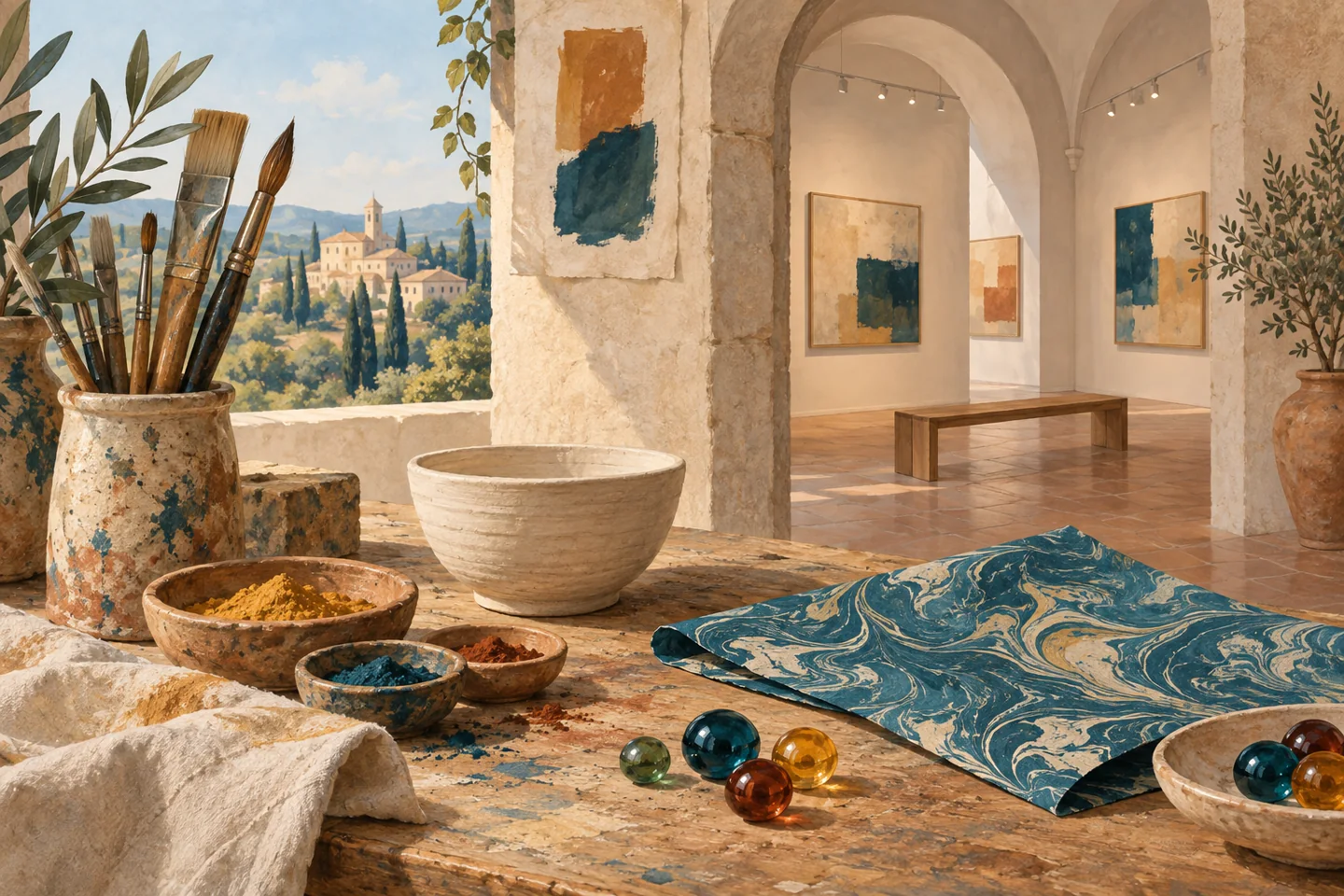
An art-focused day in Italy can begin with a painting on a gallery wall or with a material waiting on a workbench. Both can be rewarding, but they ask different things of the visitor. A gallery tour helps you look and understand; a workshop lets you try a process under instruction. A demonstration falls somewhere else again: you watch a maker at work without necessarily making anything yourself. Choose the kind of participation you want before comparing attractive photographs.
Start with the question you want the day to answer
If you want to understand why an artwork matters, how it was commissioned or what to notice in its composition, a guided gallery visit is a strong starting point. If you are curious about what a material feels like and how a simple technique works, a practical session may suit you better. Neither requires you to become an expert before arriving.
Think about attention as well as interest. Some people enjoy sustained looking and conversation; others learn best when their hands have something to do. Our guide to enjoying Italian art without museum fatigue helps you plan a pace that gives individual works room to register.
A gallery tour offers a guided way of seeing
A useful tour has a clear subject and a manageable scope. Read whether it focuses on a collection, an artist, a period or a small group of highlights. Ask how much time is spent inside, which language the guide uses, and whether admission is included. A private guide does not automatically mean private access to the building or an empty room.
Check official venue information alongside the activity description. The Uffizi Galleries’ visitor pages bring together museum, ticket and access information; use the current notices when planning your date. Our advance-booking guide can help you identify the reservations that should shape the rest of your day.
A workshop should explain what you will actually do
Look for an explicit description of the participant’s role. Will you handle tools, work with a prepared piece, decorate an object or watch an instructor complete the technical stages? Materials, equipment, instruction and finishing can be separate elements. An appealing title such as “artisan experience” does not settle those questions on its own.
Florence’s official tourism service describes a craft culture spanning materials such as leather, ceramics, glass, silk and jewellery, with workshops in several neighbourhoods. Its handicraft guide is useful context for choosing a medium that interests you. Treat a working studio as a workplace: an open shopfront is not permission to enter production areas or photograph someone at work.
Murano shows why the distinctions matter
The Murano Glass Museum’s adult guided programme describes a museum visit that can include a glassmaking demonstration. Separately, MUVE Academy’s Glass Experiences describes practical courses involving different techniques and objects. These are examples of distinct formats, not a promise that any particular tour sold elsewhere includes the same activities.
The Academy’s published arrangements also illustrate a useful practical detail: some finished pieces are collected later, while others can be collected on the day. Before booking any workshop, ask about cooling, drying, firing, collection and shipping. A lovely object is less convenient if it must be collected after your train has left. For the wider journey, use Venice Tour Hub to place a Murano visit within a realistic city plan.
Compare the complete experience, not just its duration
Check minimum ages, supervision, step-free access, seating, standing time and any clothing or safety requirements with the provider. A workshop can be physically easier than a long museum walk, but that is not guaranteed. Equally, a gallery may have a useful accessible route that differs from the standard tour. Describe your actual needs and seek confirmation before paying.
Language matters in both formats. A few translated labels are different from a fully guided session, and practical safety instructions must be understood. For a mixed-interest group, different travelers can choose different activities and reunite afterwards. You do not need to persuade everyone to love the same painting or the same kind of clay.
Build one thoughtful art day
A short gallery visit followed by an independent lunch may be enough. A workshop can stand on its own as the main event, with a neighbourhood walk afterwards. If you combine the two, allow transfer time and a proper break rather than booking adjacent start and finish times. Read our walking-tour selection guide if an outdoor art or architecture route would balance the day.
Browse Italy’s arts and events collection for the currently listed options, then check the exact date, traveler mix and inclusions. Save suitable activities in the trip planner and complete payment with the booking partner when ready. An itinerary entry records your intention; the supplier confirmation establishes the booking. The best choice is the one whose actual format matches what you want to learn, see or make.
Sources & further reading
Turn a good read into a great day.
Find a highly rated Italian experience that brings these stories to life.
Explore related experiences →