Italian civic squares: what to notice beyond the central monument
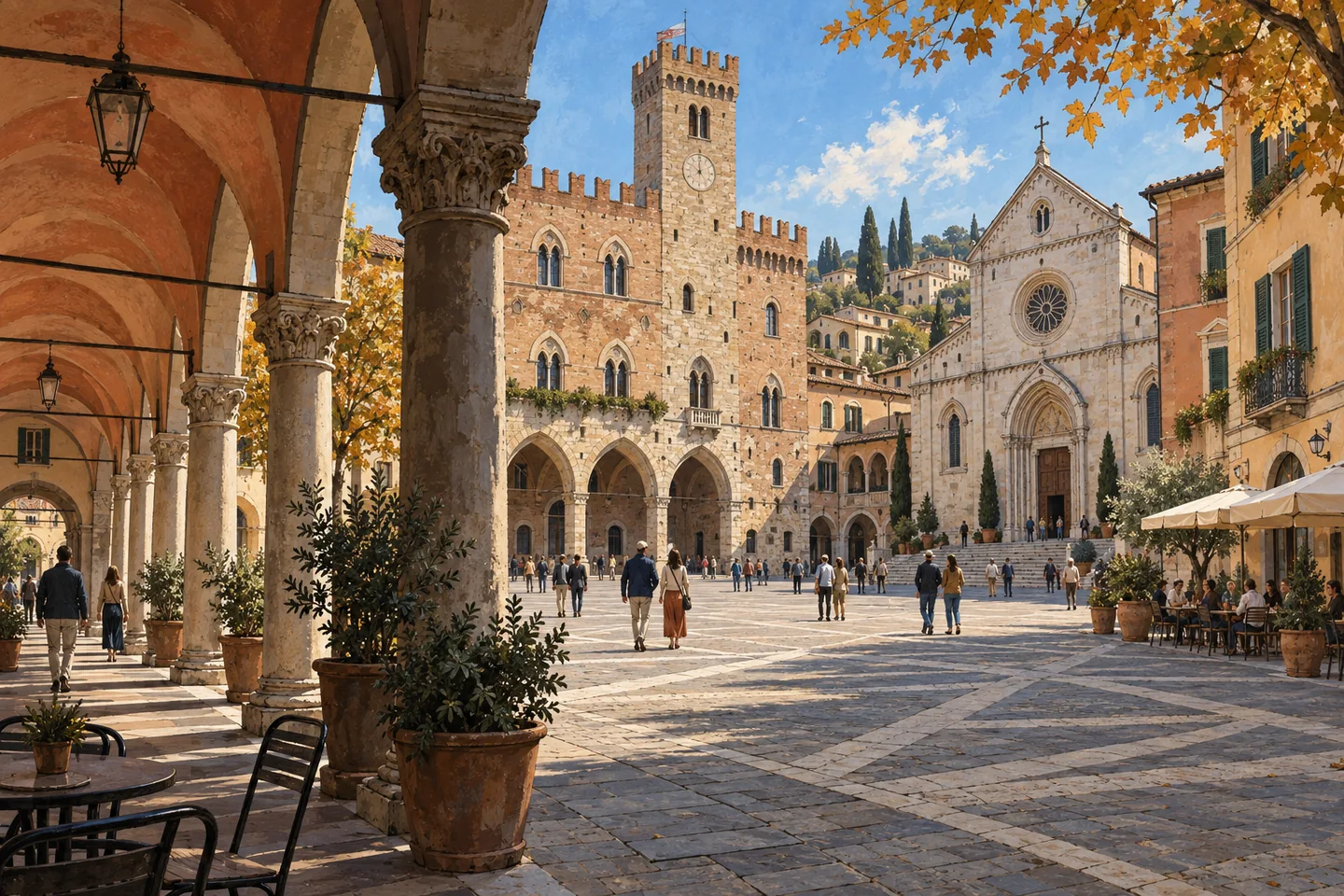
It is tempting to approach an Italian square as a photograph waiting to happen: find the famous statue, stand in front of it and move on. Try a slower experiment. Stand at one edge and look across the entire space before choosing a subject. The buildings, entrances and routes between them can explain as much as the monument. A civic square is a place where a city has arranged public life, sometimes through centuries of additions and competing ambitions.
Begin with the buildings that face one another
Identify the town hall, the principal church and any large palaces around the perimeter. You do not need to date every window immediately. First ask which buildings command attention and how their entrances relate to the open space. Is a tower visible from the approaching streets? Does a raised platform separate a doorway from the crowd? Which facade appears designed to be read from a distance?
Bologna’s official account of Piazza Maggiore describes a square assembled through successive changes, beginning with municipal purchases of houses and land around 1200. Its surrounding buildings include San Petronio, Palazzo d’Accursio, Palazzo del Podestà, Palazzo dei Notai and Palazzo dei Banchi. That list makes a useful observation exercise: instead of treating the square as one monument, notice the different institutions represented around it. For the wider visit, Bologna Tour Hub connects this central stop with walks and food experiences.
Look for spaces made for gathering
Arcades and loggias can frame the view, provide shelter and establish a transition between street and building. Their present use may differ from their original purpose. Look at how people occupy them today, then compare what you see with an official history. This is more rewarding than assuming that every covered space was built for shopping or that every impressive platform was intended for the same kind of ceremony.
Florence offers a particularly clear example. Feel Florence explains that the Loggia dei Lanzi began as a covered setting for public ceremonies and gatherings. It later became a display space for sculpture. You can therefore read two overlapping stories: the architecture’s role in assembling people and the artworks’ role in shaping what those people saw. Our guide to reading layers of Italian urban history develops this habit of separating construction, reuse and later interpretation.
Let the ground help you understand the space
Lower your gaze from the skyline. Notice changes in paving, slopes, steps and the routes people naturally take across the square. These details affect both the composition of a photograph and the experience of moving through the place. A broad open area can still be awkward for someone managing luggage, a pushchair or uneven footing. Keep observation stops out of doorways and leave room for residents whose route to work happens to pass through your sightseeing subject.
In Siena, the relationship between the square and civic buildings is especially memorable. Italy’s national tourism guide places Palazzo Pubblico and the Torre del Mangia on Piazza del Campo and identifies the square with the Palio. That association is a reminder that a public space can have a different character during an event. An ordinary sightseeing visit should not be planned on the assumption that access, crowds or views will remain unchanged during preparations and celebrations.
Notice the ordinary activity at the edges
A square is also a working part of a city. Watch where people pause, where deliveries arrive and where conversation collects. Cafés, civic offices, shops and church entrances can create several rhythms within a small area. The goal is not to make an unsupported claim about “authentic local life,” but to recognize that the place has uses beyond serving as a visitor attraction. A short, attentive pause often reveals this more effectively than racing around the perimeter.
Look for signs that distinguish public circulation from private or ticketed access. A doorway in an important building does not automatically lead to a freely accessible interior. Check the current visitor information if you want to go inside, and allow time for the visit itself. The principles in our guide to enjoying Italian art without museum fatigue apply here too: choose a few details to understand rather than trying to absorb every room and facade in a single afternoon.
Turn one square into a satisfying walk
Choose a starting edge, walk slowly across the space, then leave by a different street and glance back. This simple sequence changes the relationships between the buildings and helps you remember the square as a place rather than a flat image. A guide can add useful context when you want to distinguish a documented change from an appealing local story. Compare the route, language, duration and included interiors before booking.
Explore Italy walking tours and the local options on Florence Tour Hub. Our guide to choosing a walking tour explains what to look for beyond a list of famous stops. Leave some unbooked time in your trip planner for the square itself. The central monument will still be there when you finish looking at everything around it.
Sources & further reading
Turn a good read into a great day.
Find a highly rated Italian experience that brings these stories to life.
Explore related experiences →