Looking at sculpture in Italy: how do material, scale and viewpoint change a visit?

A sculpture changes when you move. A face that looks composed from the front can become sharply alert in profile; a fold that seems soft can turn into a deep channel of shadow. On an Italy trip, that makes sculpture a particularly rewarding subject for slow looking. You do not need a catalogue of famous names before you begin. Start with three questions: what is it made from, how big is it compared with you, and where were people meant to see it?
Begin with the object, then read the label
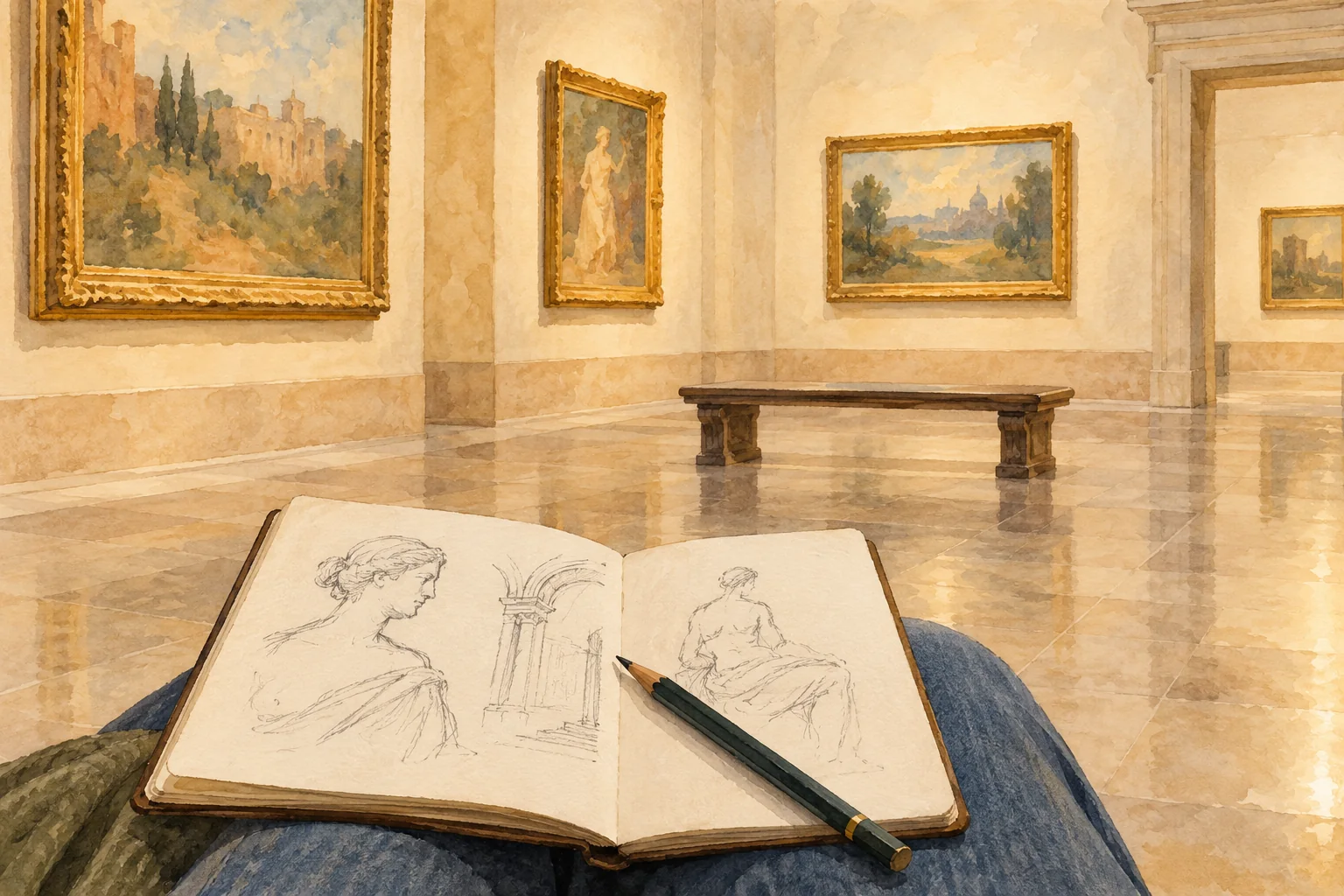
Give one work a quiet minute before seeking an explanation. Notice its outline, the direction of its weight and the spaces between its parts. Is a raised arm inviting your eye outward, or does the whole composition draw you toward its centre? These are observations, not claims about the artist's intention. A label or museum guide can then help distinguish your impression from a documented subject or purpose.
This method works especially well if you follow our advice on enjoying Italian art without museum fatigue: choose a small group of works to remember, rather than trying to absorb every room. Three carefully considered sculptures can give an afternoon a satisfying shape.
Let materials ask different questions
In Florence, the Bargello's official introduction describes a collection centred on Renaissance sculpture, including works in bronze and marble, within a much broader range of objects. It is a useful place to compare surfaces. Look for changes in reflected light, sharply cut edges and the treatment of hair or clothing. Do not assume that a rough passage is unfinished, or that every shiny surface is original: making, wear, restoration and display conditions can all complicate what you see.
Think of the material as a question to investigate, rather than a shortcut to a verdict. A convincing illusion of soft fabric is impressive, but so is a deliberately simplified shape. The Florence city guide can help you place a museum visit within a manageable city day, with time to pause afterwards instead of immediately joining another queue.
A plaster model is more than a substitute
The Museo Gypsotheca Antonio Canova in Possagno preserves original models associated with Canova's marble sculptures. Its account of his working process explains the progression through drawings, clay studies, moulds and full-size plaster models, with reference points used in transferring dimensions to marble. A model can therefore offer evidence about making, rather than merely stand in for an absent finished work.
Ask which stage the object represents. Is it a small exploratory study, a full-size model, a later cast or a finished sculpture? Those distinctions make a visit more interesting than dividing everything into “real” and “copy”. Possagno is a separate destination in the province of Treviso, not a museum inside Venice; plan the journey independently using our guide to choosing transport around Italy. Do not add it to a city afternoon without checking the actual connections.
Compare a monument's setting with its museum setting
Rome supplies a clear example of why location matters. The Capitoline Museums explain that the bronze equestrian statue of Marcus Aurelius is protected inside the museum, while a replica occupies its position in Piazza del Campidoglio. The outdoor setting and the museum display answer different questions: one lets you consider a monument's relationship to a square; the other lets you study the surviving object under different conditions.
Use Rome Tour Hub for the wider city chapter. If your interest turns toward archaeological remains, the separate Colosseum specialist guide offers a different focus. Neither a street view nor a museum ticket automatically includes the other places on your list.
Move thoughtfully, without touching
Where the permitted route allows it, change your viewpoint slowly. Try a side view and then step farther back. Keep clear of barriers, other visitors and circulation routes; a photograph is not a reason to lean over a plinth. If you need a tactile or adapted visit, ask the institution about its current provision before travelling. A general invitation to look closely is not permission to touch, and one museum's arrangements should never be assumed to apply elsewhere.
A practical plan is one collection, a few chosen works and an unhurried break. Compare a self-directed visit with a guided option using our gallery tour and workshop guide, then browse the Italy experience collection for relevant options. Check each listing's venue, admission and meeting details. The satisfying souvenir is a new habit of noticing: the next statue you pass may hold your attention long after its familiar name has stopped doing the work.
Sources & further reading
Turn a good read into a great day.
Find a highly rated Italian experience that brings these stories to life.
Explore related experiences →