Regional bread in Italy: what can a bakery teach you about place?

A bakery can give an Italy trip a wonderfully modest research question: why does the bread look like this here? You do not need to become a food historian before lunch. Start with something you can actually see, ask a short question when the counter is quiet, and notice how the answer changes your next meal. A loaf is a useful doorway into regional food because shape, ingredients and the way it is eaten are all available for comparison. The trick is to stay curious without asking one shop to represent an entire country.
Start with two places, not a national bread checklist
Tuscany and Ferrara make an instructive comparison. One invites you to consider the relationship between bread and strongly flavoured accompaniments; the other makes you look closely at a distinctive shape. Neither example exhausts the bread made in its region, and a bakery can sell both local specialities and products with much wider circulation. Treat a named tradition as a starting point for a conversation, not a rule about everything on the shelf.
This is a small-scale version of exploring Italy through regional food. You can pursue it within a trip you already planned. There is no need to add a long transfer simply to complete a tasting list.
What changes when the bread has no added salt?
The Regione Toscana description of Pane Toscano DOP identifies soft-wheat flour, water and natural starter, with no added salt. It connects that characteristic with the bread’s role beside savoury foods. Taste a small piece on its own, then alongside something you have ordered, and consider how the balance changes. An initially restrained flavour can make more sense as part of a meal.
The regional account also points to the importance of using leftover bread in dishes such as panzanella and ribollita. That gives you a second question: is the loaf destined for immediate slicing, or might it have another culinary life? Avoid turning a colourful origin story into established history unless a reliable source supports it.
Why does Ferrara’s coppia have four points?
Ferrara is a separate city in Emilia-Romagna, not a neighbourhood of Bologna. Its Coppia Ferrarese IGP has a cross-like form made by joining two strips of dough at a central band. Four twisted ends project from that centre. The regional tourism authority describes a crisp bread whose softer crumb is concentrated in the central join. Here, the shape gives you different textures within one piece.
The listed ingredients include lard as well as olive oil, flour, water, natural starter, salt and malt. That is a useful reminder to ask about ingredients instead of assuming that every plain-looking bread suits every diet. A product name, a photograph or the absence of visible filling is not enough to settle that question.
Look before inventing an explanation
At the counter, compare the outside and the cut surface if one is visible. Is the loaf tall or flat? Does it have a broad crust or slender ends? Is the crumb close-textured or open? These are observations you can make without guessing a medieval cause. If the baker explains a shaping technique, keep that explanation separate from your own impression. A practical answer about handling dough can be just as interesting as a grand historical story.
You might keep a tiny note: the name used in that shop, the town, one ingredient question and one texture you noticed. A photograph of the label, if permitted, can help you remember the precise product. It is more useful than a confident caption based on appearance alone.
Ask questions that fit a working bakery
Choose a quiet moment and keep your first question simple: which bread is characteristic of this area? Then ask how people usually serve it, or whether the shop recommends eating it that day. Let the answer guide the next question. A busy queue is not the moment for a long interview, and a purchase does not include access to the ovens or production rooms.
For dietary requirements, ask directly about the specific product and relevant preparation conditions. Our guide to food tours for groups with different diets helps turn those needs into questions before booking. General descriptions cannot replace an answer from the business serving you.
Build a tasting into the day you have
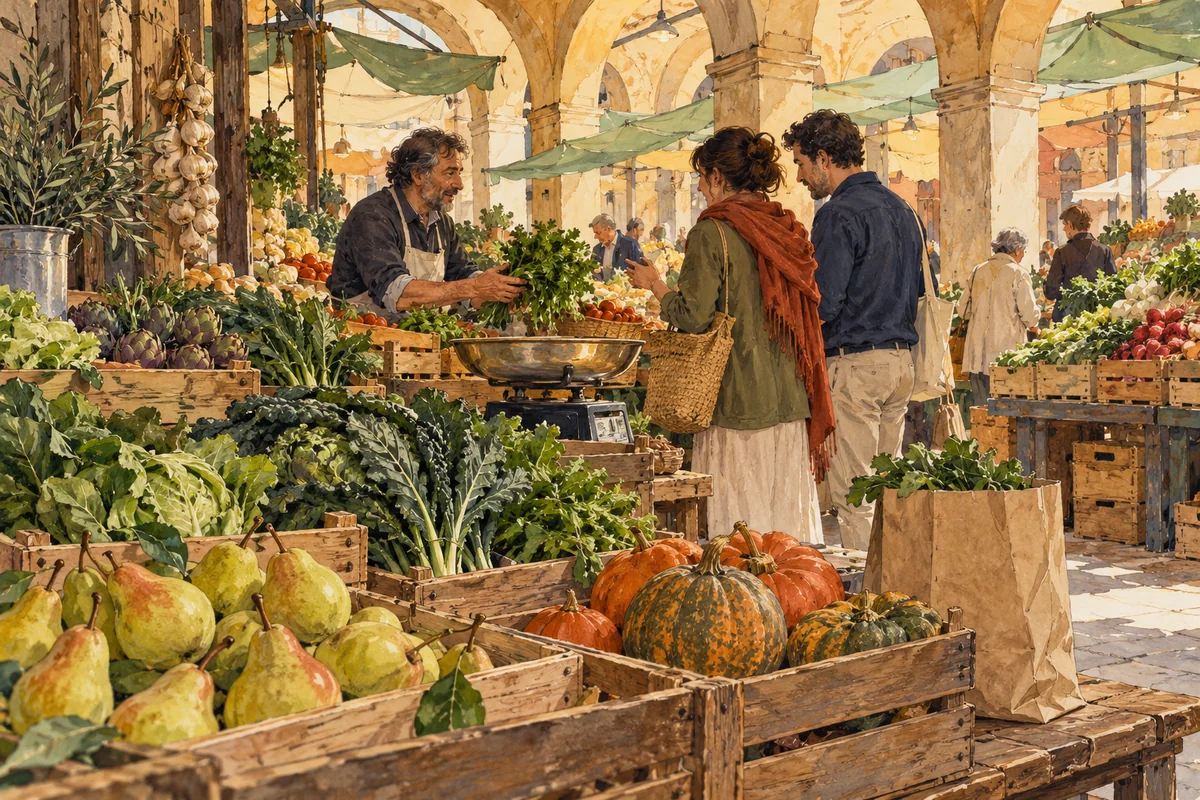
Buy a manageable amount and leave room for the rest of the day. A bakery stop can complement a thoughtful food-market visit, but checking opening hours and the route still matters. Ask about portion sizes and prices before ordering; do not assume that a displayed loaf is sold in the quantity you had in mind.
For a Florence stay, the Florence food experience collection offers a local starting point. If Bologna is your base, its food collection covers that city’s options; a visit to Ferrara needs a separate plan. Compare the Italy food tours and cooking classes by their actual stops and inclusions. The satisfying result is not a verdict on the country’s best bread. It is a better question, a remembered texture and a place that feels a little more specific.
Sources & further reading
Turn a good read into a great day.
Find a highly rated Italian experience that brings these stories to life.
Explore related experiences →